How to Grow a Photo Booth Business: What 2,611 Multi-Booth Owners Taught Us About Scaling
Most photo booth owners hit the same ceiling. Here's the data behind when, why, and how the most successful operators scale past it — and what you can learn from their decisions.
Your first photo booth proved the model. You're booking events, delighting guests, and building a reputation. But at some point, every photo booth business hits a crossroads: keep running one booth and stay comfortable, or invest in growth and scale into something bigger.
We analyzed the purchase history of over 10,000 photo booth owners to find out what separates single-booth operators from those running profitable multi-booth fleets. The data tells a clear story — and it starts with three friction points that almost every growing owner encounters.

The Three Signals That It's Time to Scale Your Photo Booth Business
Before owners buy their next booth, they almost always hit the same patterns. Recognizing these early can help you decide whether the timing is right.
1. You're Declining Bookings on Peak Dates
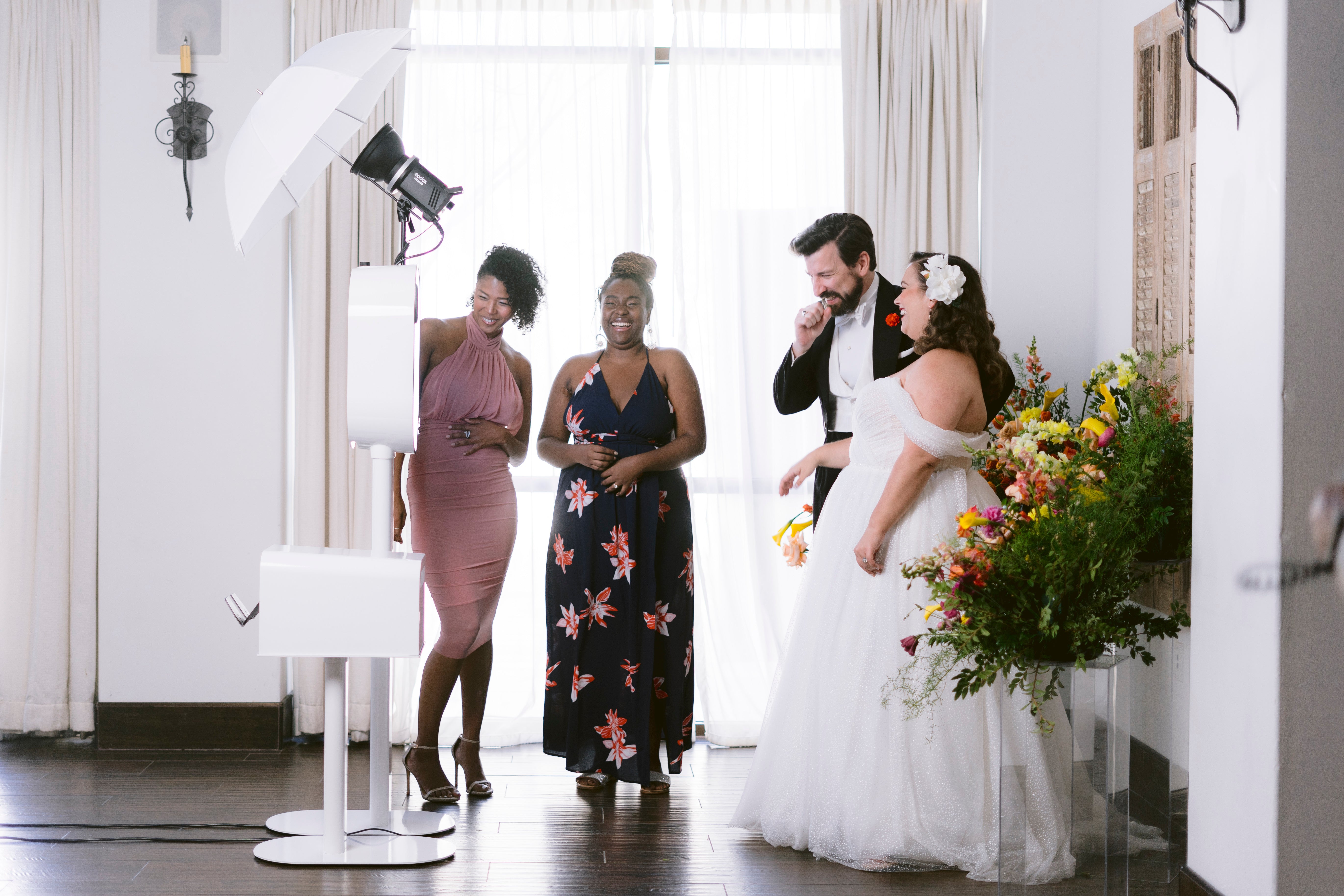
This is the most common trigger, and it's simple calendar math. Wedding season, corporate holiday parties, prom weekends, and graduation events all cluster around the same dates. With one booth, you're forced to choose between competing inquiries every busy weekend.
The real cost isn't just the $800–$1,500 event you turned down. It's the referral chain you lost. That corporate client you declined? They would've referred you to three other departments. That bride? She had two friends getting married next year. Every "no" breaks a referral chain that would have generated revenue for months.
2. You Can Only Offer One Type of Experience
A single booth limits you to a single event category. If you run a traditional photo booth, you can't say "yes" when a client asks for 360° video, DSLR-quality prints, or a permanent venue installation. That work — and all the referrals it would've generated — goes to whoever can offer what you can't.
The most successful photo booth businesses we studied don't just add capacity; they add capability. They expand into new experience types that reach entirely different client segments without cannibalizing their existing bookings.
3. Your Competitors Are Capturing Your Overflow
Every event you decline gets booked by someone else. And that client doesn't just disappear — they build a relationship with your competitor and bring their entire network with them. The photo booth market rewards operators who can always say "yes."
In our data, multi-booth operators retain significantly more repeat clients, because availability is one of the strongest drivers of loyalty in the events industry.
The Data: When Successful Owners Scale (and How Fast It Compounds)
We tracked every repeat booth purchase across our customer base to understand the timing of expansion. The pattern is striking.
The key numbers:
-
1 in 4 photo booth owners go on to purchase at least a second booth
-
28 days is the median time between the first and second booth purchase among those who expand
-
2,611 owners in our data have purchased more than one booth
That 28-day median is worth pausing on. It tells us that the owners who move fastest aren't overthinking it — they've seen enough demand to know the investment will pay off quickly. Many recoup their second booth investment within their first month of double-booking weekends.
The Compounding Effect: Why Each Expansion Happens Faster
Here's where the data gets interesting. The time between purchases shrinks dramatically with each subsequent booth:
|
Expansion Step |
Owners Who Reached This |
Median Time Between Purchases |
|
1st → 2nd booth |
2,611 |
28 days |
|
2nd → 3rd booth |
679 |
106 days |
|
3rd → 4th booth |
258 |
93 days |
|
4th → 5th booth |
125 |
64 days |
|
5th → 6th booth |
62 |
58 days |
The first expansion takes the longest decision. After that, each subsequent purchase happens faster — the business model is proven, the operational systems are in place, and client demand is already there. By booth four or five, owners are expanding roughly every two months.
The takeaway is simple: the sooner you build capacity, the faster your entire operation compounds. Waiting doesn't reduce risk — it just delays the compounding.

Six Photo Booth Experiences That Open New Revenue Streams
Growing a photo booth business isn't just about adding more of the same. The most successful operators diversify their experience offerings to reach new client segments. Here are the six most common experience categories that multi-booth owners add.
Stationary Photo Booth
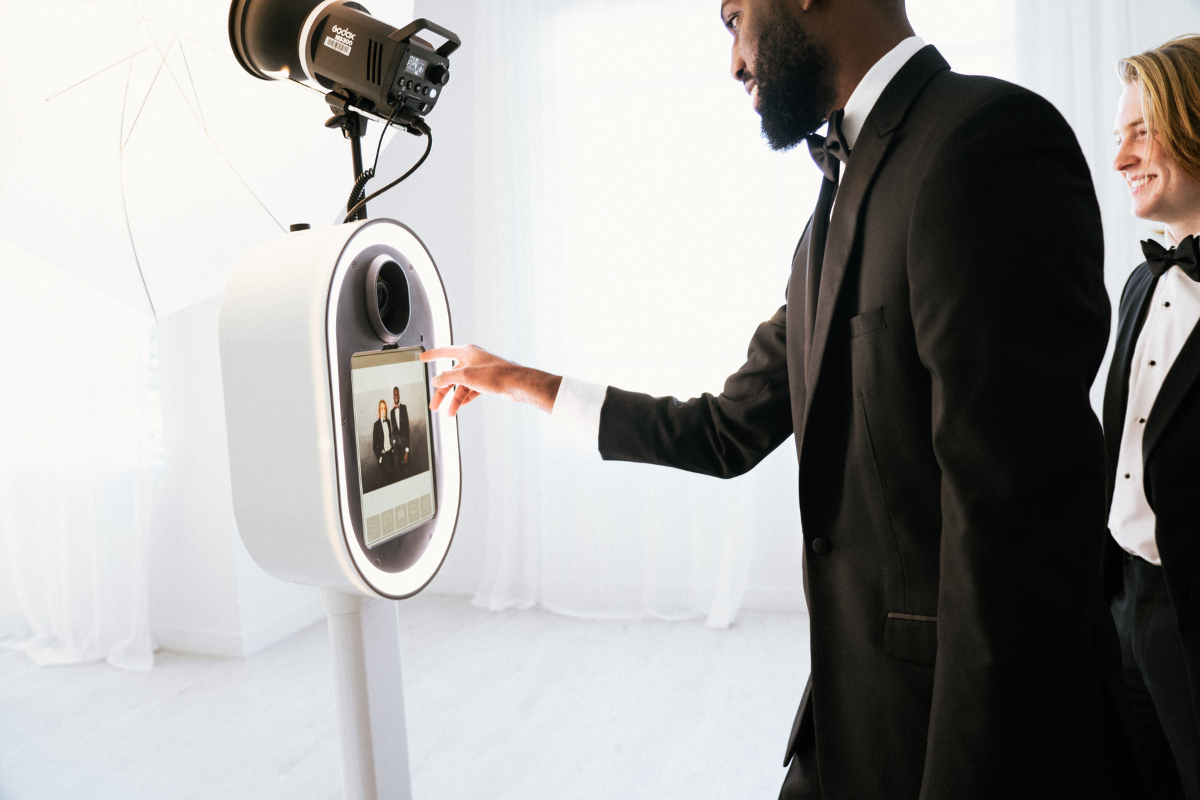
The foundation of most photo booth businesses. Self-service stations that guests already know and love — ideal for weddings, birthdays, and corporate mixers. If you're already running one successfully, adding a second lets you cover multiple events on the same day.
Best for: Duplicating what works and covering more dates.
Roaming Photography

Detaching the camera from the stand and moving through the crowd captures candid moments, VIP snapshots, and table-side group shots. It's a popular premium upsell that commands higher per-event pricing and creates a more personalized guest experience.
Best for: Adding a high-touch upsell to your existing events.
DSLR Studio Quality
A true DSLR camera with professional flash and umbrella lighting delivers studio-grade results. This level of output unlocks luxury weddings, fashion events, and brand activations where image quality is non-negotiable.
Best for: Moving upmarket into premium events and branded activations.
On-Site Printing
Physical prints in 15 seconds. Corporate clients love branded prints for activations, and multiple media sizes support sponsorship packages and custom campaigns. Guests walking away with a tangible keepsake dramatically increases perceived event value.
Best for: Corporate events, branded activations, and adding a premium deliverable.
360° Video Capture

The most-requested experience by event planners and brands right now. Cinematic slow-motion clips that guests share instantly on social media — reaching an entirely different client segment than traditional photo booths. If you don't offer 360° video, you're invisible to a growing segment of the market.
Best for: Tapping into viral content demand and reaching new client segments.
Permanent Installations
Mounting a booth in a bar, restaurant, mall, or custom kiosk using VESA compatibility. This generates recurring monthly income from venues without attending a single event — a completely different business model from event-based work.
Best for: Building passive, recurring revenue alongside your event business.
What Repeat Buyers Actually Choose: The Full Data Breakdown
One of the most useful things we can share is what second-booth buyers actually purchased. The data varies significantly depending on which booth you start with.
Owners Who Started With an Entry-Level Booth
Among owners who started with our most popular entry-level photo booth (Salsa 1), the second-booth decision was remarkably balanced:
-
35.1% bought another of the same booth to double their capacity
-
31.9% upgraded to a DSLR booth (Guac & Chips) for print and studio-quality capabilities
-
31.2% moved to the newer Salsa 2 model for updated hardware
-
1.8% diversified into 360° video with a Tortilla
This near-even three-way split tells an important story: entry-level booth owners diversify the most. They've learned what the market wants and make a deliberate choice about where to expand. And by their third booth, upgrading to a DSLR-capable booth becomes the #1 choice — suggesting that as operators mature, they gravitate toward premium capabilities.
Owners Who Started With a Mid-Range Booth
Salsa 2 owners are much more loyalty-driven: 62.7% buy another Salsa 2 as their second booth. When they do diversify, 23.5% add a Guac for print capabilities, and 13.7% add a Tortilla for 360° video.
The pattern here is clear — if you love your booth and your clients love the experience, doubling down lets you serve more of the same demand.
Owners Who Started With a Premium DSLR Booth
Guac & Chips owners show strong loyalty too: 53.9% buy another Guac. Among those who diversify, 26.1% add a Salsa 2 — a lighter, more portable option for higher-volume or venue-based events where they don't need full DSLR quality.
The takeaway for premium booth owners: your second booth often isn't another premium unit. It's a more portable option that lets you say "yes" to events where you'd otherwise send your expensive setup.
The Software Profile of Multi-Booth Owners
Hardware is only half the story. We also looked at which software plans the most successful fleet operators use, and the data is unambiguous:
-
86% of repeat booth buyers run Fiesta Pro plans
-
77% have active subscriptions right now
-
81% prefer monthly billing for maximum flexibility
Multi-booth owners don't just invest in more hardware — they invest in the software that powers their operations. Advanced multi-booth management, custom overlays, and integrated data capture tools become increasingly valuable as your fleet grows. The 77% active rate across this cohort confirms these aren't idle investments — these are working fleets.
If you're currently on a basic software plan and considering expansion, upgrading your software is often as impactful as upgrading your hardware. You can learn more about Fiesta here.
Why Operators Scale Within One Ecosystem
One pattern we see consistently among the most operationally efficient fleet owners: they keep everything within a single vendor ecosystem. Here's why that matters.
Operational Simplicity
Same hardware platform, same software backend, same troubleshooting process. Your team learns one system and runs every booth the same way. There's no retraining when you add a new unit, no second software stack to manage, no compatibility issues to debug on-site at 7 AM before a wedding.
Mixed-vendor fleets create compounding complexity: multiple logins, different update cycles, inconsistent staff training, and twice the troubleshooting overhead.
Unified Brand Experience
When all your booths run the same platform, every event delivers the same UI flow, the same aesthetic quality, and the same file delivery and data capture process. That consistency matters enormously for corporate clients managing multi-location activations, high-end wedding planners who expect reliability, and venue partners who judge you by your worst event — not your best.
Support That Sees the Full Picture
When your entire fleet is from one vendor, support sees your full account history, account managers understand your total capacity, and growth recommendations are based on your entire operation — not a single product in isolation.
Mixed fleets mean different warranty policies, different shipping timelines, different support quality, and no single person who understands how all the pieces fit together.
The bottom line: scaling inside one ecosystem means you're never managing multiple vendor relationships. You're building a deeper partnership with one.
One Booth vs. Multi-Booth Fleet: How the Business Model Changes
Here's how the core business metrics shift when operators go from one booth to two or more:
|
Category |
One Booth |
Multi-Booth Fleet |
|
Weekend Capacity |
1 event per day maximum |
2–3 simultaneous events |
|
Client Retention |
Declined clients + referrals go elsewhere |
Accept every inquiry, retain referral chains |
|
Service Range |
Single experience, single market |
Photo, 360°, print, installations |
|
Unit Economics |
Fixed overhead spread across fewer bookings |
Overhead amortized across more events |
|
Referral Flywheel |
Lost bookings break referral chains |
Every event compounds into new leads |
|
Growth Trajectory |
Revenue grows linearly at best |
679+ owners went from 2 → 3 and beyond |
The shift from one booth to two isn't just incremental growth. It fundamentally changes the economics — your marketing cost per event drops, your referral network compounds faster, and your revenue ceiling lifts significantly.
How to Decide If It's Time to Add Your Next Booth
If you're reading this and seeing yourself in the data, here's a simple framework for evaluating whether expansion makes sense right now:
Talk Through the Numbers
Sit down with someone who understands the photo booth business model — whether that's a vendor strategist, a mentor, or another multi-booth owner in your network. Share your current booking volume, the inquiries you're declining, and your revenue goals. The math usually becomes clear quickly.
If you're a PBSCO owner, our Photo Booth Strategists can review your specific account and help you evaluate the right timing and product fit based on what the data shows for owners in your market segment.
Choose Your Expansion Path
The data shows two dominant strategies: double down on what's working (buy the same booth to add capacity) or diversify into a new experience type (add 360° video, DSLR printing, or permanent installations). Both work — the right choice depends on what your market is asking for.
Move When the Timing Is Right
Once you've made the decision, execution matters. Look for vendors that ship quickly, offer multi-booth software management out of the box, and provide support that understands fleet operations. The faster your second booth is generating revenue, the faster the compounding effect kicks in.
The Bottom Line
The data from 2,611 multi-booth owners tells a consistent story: the operators who invest early in capacity and capability build businesses that compound faster, retain more clients, and generate significantly more revenue than those who wait.
Whether you're currently running your first booth or your fifth, the same principles apply. Recognize when demand is outpacing your capacity, diversify your offerings to reach new markets, invest in the software and ecosystem that reduce operational friction, and move decisively when the timing is right.
The photo booth industry rewards operators who can always say "yes."
Curious whether it's the right time for your business? Talk to a Photo Booth Strategist who can walk through the data for your specific market and help you figure out your best next step.